If you’ve seen “merguez” on a menu and ordered it without quite knowing what you were getting, you’re not alone — it’s one of North Africa’s most beloved exports, and one of the more quietly underrated items on Fatima Bazaar’s halal butcher counter. Here’s what it actually is, where it comes from, and how to cook it at home.
The Origin: Maghreb Street Food, Gone Global
Merguez is a thin, bright-red fresh sausage native to the Maghreb region of North Africa — Morocco, Algeria, Tunisia, and Libya — where it’s grilled on street corners, served at weddings, and stuffed into sandwiches at every hour of the day. Traditionally made from lamb, beef, or a blend of both, its defining trait isn’t the meat itself but the spice blend packed into it: harissa (a North African chili paste), cumin, paprika, garlic, coriander, and sometimes fennel, all combined to produce a sausage that’s spicy, earthy, and unmistakably North African in flavor. Merguez made the leap into French cuisine decades ago via North African immigrant communities and is now a fixture at French butcher counters and barbecues — but its roots, and its best versions, remain firmly Maghrebi.
What Makes Merguez Different From Other Sausages
Compared to an Italian sausage or a standard beef link, merguez is thinner, spicier, and cooks faster — usually just a few minutes per side over direct heat. It doesn’t rely on fennel and oregano the way Italian sausage does; instead, the harissa and paprika give it real heat and a deep red color, while cumin and coriander add the North African backbone. It’s meant to be eaten hot off the grill, not simmered slowly like a stew sausage.
Fatima Bazaar’s Beef Merguez Sausage
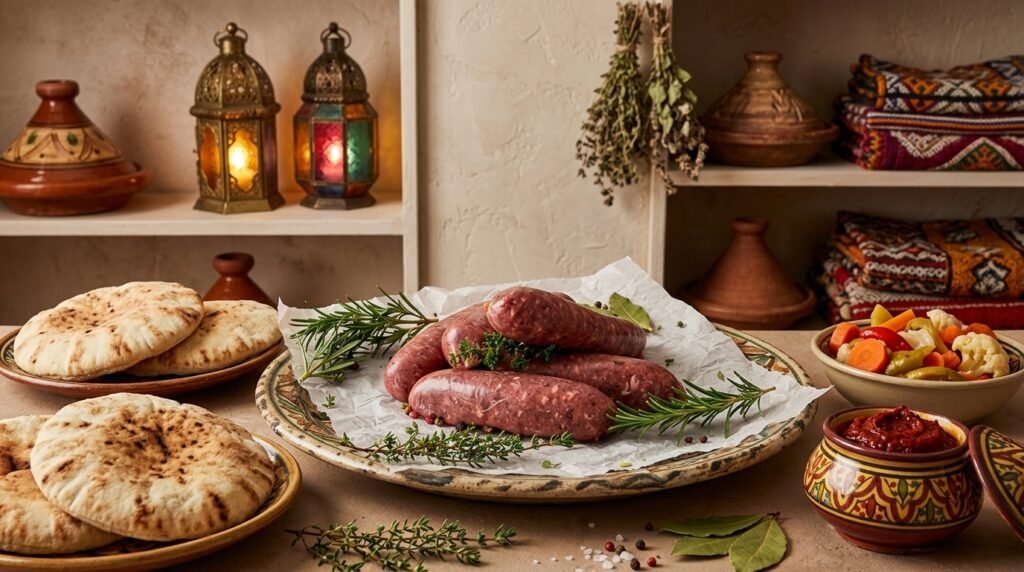
Fatima Bazaar’s butcher counter carries Beef Merguez Sausage at $11.99/lb — a 100% Zabiha Halal, hand-slaughtered beef sausage, sold fresh alongside the counter’s full range of Harris Ranch beef cuts. Because it’s beef rather than lamb, it’s slightly milder in fattiness than a traditional Maghrebi lamb merguez, while keeping the same spice profile that defines the dish.
How to Cook It
Merguez rewards simplicity. Grill it whole over medium-high heat for six to eight minutes, turning occasionally, until the casing is charred in spots and the inside is fully cooked. Resist the urge to prick the casing — that’s where the fat and spice-infused juices live. Once off the grill, merguez has three classic serving styles worth trying:
- In pita, North African sandwich-style — split, grilled, tucked into warm pita with pickled vegetables (torshi or quick-pickled turnip) and a cooling yogurt or tahini sauce to offset the heat.
- Alongside couscous — sliced and served over a plate of couscous with a spoonful of harissa on the side, the way it’s traditionally plated in Morocco and Tunisia.
- As a shakshuka add-in — sliced into rounds and simmered into a tomato-and-egg shakshuka for a heartier North African-style breakfast.
Why It’s Worth Trying if You Haven’t
Most people who try merguez for the first time expect something close to a spicy Italian sausage and are surprised by how distinct the flavor actually is — the harissa gives it a smoky, chili-forward heat that’s genuinely different from anything in standard American or Mediterranean sausage-making. For halal shoppers who already know the counter’s steaks and lamb chops well, the Beef Merguez Sausage is an easy, inexpensive way to try something new from the same case.
How to Order
Beef Merguez Sausage is available at Fatima Bazaar’s butcher counter, 805 Scott Blvd, Santa Clara, or online for pickup.
Order now: online-ordering.innowi.com/branch/fatimabazaar Call: (408) 247-0997 Hours: Daily 9:00 AM – 9:00 PM
Frequently Asked Questions
Q1: What is merguez sausage made of?
A1: Traditionally lamb, beef, or a blend, seasoned heavily with harissa, cumin, paprika, garlic, and coriander. Fatima Bazaar’s version is 100% Zabiha Halal beef.
Q2: Is merguez spicy?
A2: Yes — the harissa and paprika give merguez a genuine, noticeable heat, more assertive than a typical Italian or breakfast sausage.
Q3: How do I cook merguez at home?
A3: Grill whole over medium-high heat for six to eight minutes, turning occasionally, without piercing the casing. Serve in pita, over couscous, or sliced into shakshuka.
Q4: Where does merguez come from?
A4: Merguez originated in the Maghreb region of North Africa — Morocco, Algeria, Tunisia, and Libya — and later became popular in French cuisine through North African immigrant communities.
Q5: Is Fatima Bazaar’s merguez halal?
A5: Yes. Beef Merguez Sausage ($11.99/lb) at Fatima Bazaar is 100% Zabiha Halal, hand-slaughtered beef, sold fresh at the Scott Blvd butcher counter.